Article
Lifecycle Management of TOC Analyzers: Why Calibration, Validation, and Maintenance Are Non-Negotiable Under US FDA Expectations
Jan 07, 2026
Enoch Daniel
Director
In regulated pharmaceutical and laboratory environments, Total Organic Carbon (TOC) analyzers play a critical role in verifying the purity of pharmaceutical water systems, including Purified Water (PW), Water for Injection (WFI), and Clean Steam. Under US FDA regulations, the reliability of TOC data directly impacts product quality, batch release decisions, and regulatory compliance.
However, FDA expectations extend far beyond simply owning a compliant TOC analyzer. Regulators increasingly focus on how instruments are calibrated, validated, maintained, and controlled throughout their entire lifecycle. Accurate data at a single point in time is not sufficient; the data must be consistently accurate, traceable, and defensible.
This article examines the lifecycle of TOC analyzers from an FDA perspective and explains why calibration, validation, and maintenance are non-negotiable pillars of compliance.
The FDA View of the Instrument Lifecycle
From an FDA standpoint, a laboratory or process instrument does not operate in isolation. It is part of a quality system governed by GMP principles, data integrity requirements, and risk-based control.
The lifecycle of a TOC analyzer typically includes:
- Procurement and supplier qualification
- Installation and commissioning
- Baseline performance verification
- Routine operation and monitoring
- Calibration and re-verification
- Validation and change control
- Preventive and corrective maintenance
- Periodic review and eventual decommissioning
At every stage, FDA inspectors assess whether the instrument continues to produce reliable, scientifically sound, and traceable data.
Calibration, validation, and maintenance are not isolated tasks; they are continuous controls embedded throughout the lifecycle.
Calibration: The Foundation of Measurement Accuracy
Calibration is the process of verifying that a TOC analyzer measures accurately by comparing its response against certified reference standards. Under FDA expectations, calibration establishes the scientific credibility of analytical results.
Why Calibration Is Critical for TOC Analysis
TOC analyzers operate at very low detection limits, often in the parts-per-billion (ppb) range. At these levels, even minor drift can lead to:
- False acceptance or rejection of pharmaceutical water
- Incorrect diversion decisions in water systems
- Invalid trend data used for system qualification
- Regulatory observations during inspections
The FDA considers unverified or poorly controlled calibration a direct data integrity risk.
What the FDA Expects
- Use of certified TOC standards traceable to recognized sources
- Defined calibration frequency based on risk and instrument performance
- Intermediate verification checks to confirm calibration stability
- Complete documentation of calibration results, deviations, and corrective actions
Skipping or delaying calibration can compromise the accuracy of TOC results, potentially rendering decisions based on those results invalid.

Validation: Demonstrating Regulatory Fitness for Use
While calibration confirms measurement accuracy, validation proves that the entire TOC system consistently performs as intended in a regulated environment.
From the FDA perspective, validation is not optional, but a fundamental GMP requirement.
Scope of Validation for TOC Analyzers
Validation must demonstrate that the analyzer, its software, and data handling processes meet regulatory expectations for their intended use. This typically includes:
- Installation Qualification (IQ): Verifying correct installation, utilities, and configuration
- Operational Qualification (OQ): Demonstrating that the analyzer operates within specified limits
- Performance Qualification (PQ): Confirming consistent performance under routine sample conditions
For TOC analyzers used in pharmaceutical water systems, validation also aligns with USP <643> requirements.
FDA and Data Integrity
FDA inspectors place strong emphasis on:
- Secure electronic records
- Audit trails
- User access controls
- Change management
Validation must demonstrate compliance with 21 CFR Part 11, particularly when electronic records and signatures are utilized.
Without proper validation, even accurate TOC data may be considered non-defensible during audits.
Maintenance: Sustaining Control Over Time
Maintenance ensures that a TOC analyzer remains in a validated and calibrated state throughout its operational life. FDA views inadequate maintenance as a common root cause of data integrity failures.
Types of Maintenance FDA Expects
- Preventive maintenance: Scheduled replacement of consumables and components before failure
- Routine housekeeping: Cleaning of sample paths, filters, and wetted components
- Performance checks: Diagnostics, system suitability tests, and calibration verification
- Software maintenance: Updates, backups, and cybersecurity controls
Neglecting maintenance increases the risk of:
- Drift between calibration events
- Instrument downtime during critical operations
- Invalid or questionable data
Why Calibration, Validation, and Maintenance Are Interdependent
FDA does not evaluate these elements in isolation. They form a single control ecosystem:
- Calibration without maintenance degrades quickly
- Validation without calibration lacks scientific credibility
- Maintenance without validation cannot ensure regulatory compliance
A weakness in any one area undermines the integrity of the entire system.
From a regulatory standpoint, instrument lifecycle control is a continuous obligation, not a one-time exercise.
Optimizing the TOC Analyzer Lifecycle Under FDA Oversight
Modern TOC analyzers are designed to reduce lifecycle complexity through stable calibration, robust diagnostics, and compliance-ready data handling. However, technology alone is not enough.
FDA expects manufacturers to demonstrate:
- Risk-based calibration strategies
- Documented validation throughout system changes
- Preventive maintenance programs tied to performance data
- Ongoing review of trends, deviations, and system health
When these controls are in place, TOC analyzers become reliable guardians of pharmaceutical water quality rather than compliance liabilities.
Conclusion: Why These Controls Are Non-Negotiable
Under US FDA regulations, data integrity is inseparable from patient safety. TOC analyzers generate data that directly influences product quality, release decisions, and regulatory confidence.
- Calibration ensures accuracy.
- Validation ensures compliance.
- Maintenance sustains control.
Together, they ensure that TOC data is accurate, traceable, reproducible, and defensible throughout the instrument’s lifecycle.
For pharmaceutical laboratories and manufacturing facilities, investing in a disciplined lifecycle management strategy is not a best practice but a regulatory necessity.
Because when FDA inspectors ask,
“How do you know this data is reliable?”
The answer must already be built into your system.
FAQs
1. How often should the Sievers M9 TOC Analyzer be calibrated?
The M9 Analyzer typically holds calibration for up to 12 months, but routine verification and intermediate calibration checks are recommended to ensure ongoing accuracy.
2. What is validation for TOC analyzers in pharmaceutical labs?
Validation is the documented process of proving that an instrument operates consistently within specified parameters and meets regulatory requirements (IQ, OQ, PQ).
3. Can maintenance improve TOC analyzer uptime?
Yes — scheduled preventive and predictive maintenance minimizes downtime and helps maintain measurement precision.
4. Why is calibration stability important in TOC analysis?
Stable calibration ensures reliable results over time, reducing the frequency of recalibration and preserving data integrity.
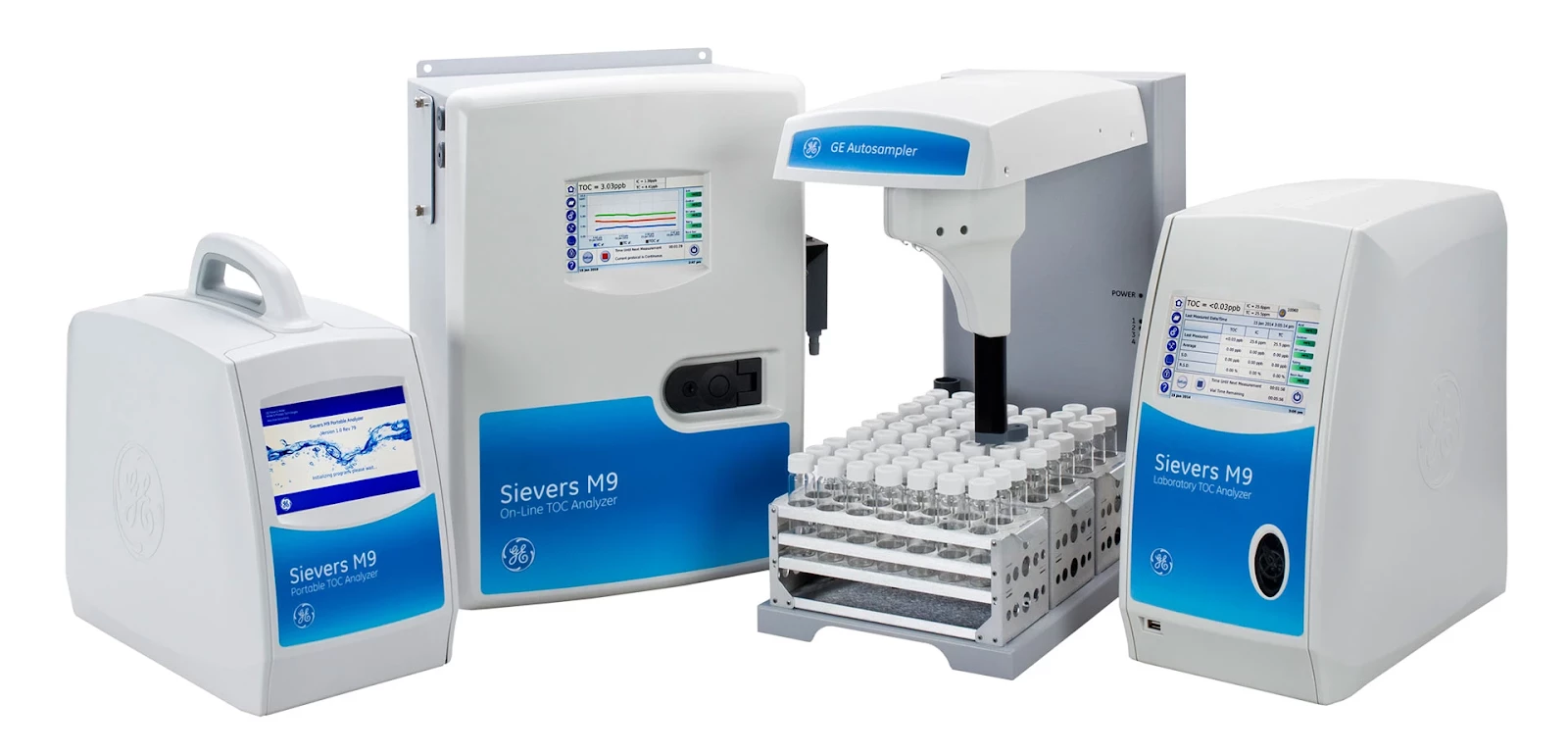
5. What features of the Sievers M9 support lifecycle management?
Features like automated calibration protocols, autoreagent optimization, and regulatory-ready software enhance efficiency in calibration, validation, and maintenance tasks.